Introducing ARCitect 2.0: Functional Specs
Your docs, your designs, your diagrams. One Functional Spec.
Every project starts with more context than ever. There’s a PRD in Google Docs, a roadmap in Notion, architecture diagrams, screens from Claude Design, and decisions recorded across all of them.
Each one holds part of the picture. None of them is the whole thing.
A team still needs one clear, consistent definition of what it’s building. That matters even more when part of the team is coding agents, each working from whatever context it was handed. Without that shared definition, every unanswered question becomes an assumption, and every assumption is another opportunity to build the wrong thing.
Today we’re introducing ARCitect 2.0, bringing your team’s existing sources together to create something none of them could provide on their own: one coherent Functional Spec. Not simply a summary of what you’ve already written, but a definition of what your product should do, built through collaboration between you and ARCitect.
From your team’s work to one Functional Spec
ARCitect 2.0 introduces three connected capabilities that transform how your team defines what it’s building.
- 01
Sources
Bring the sources your team already has
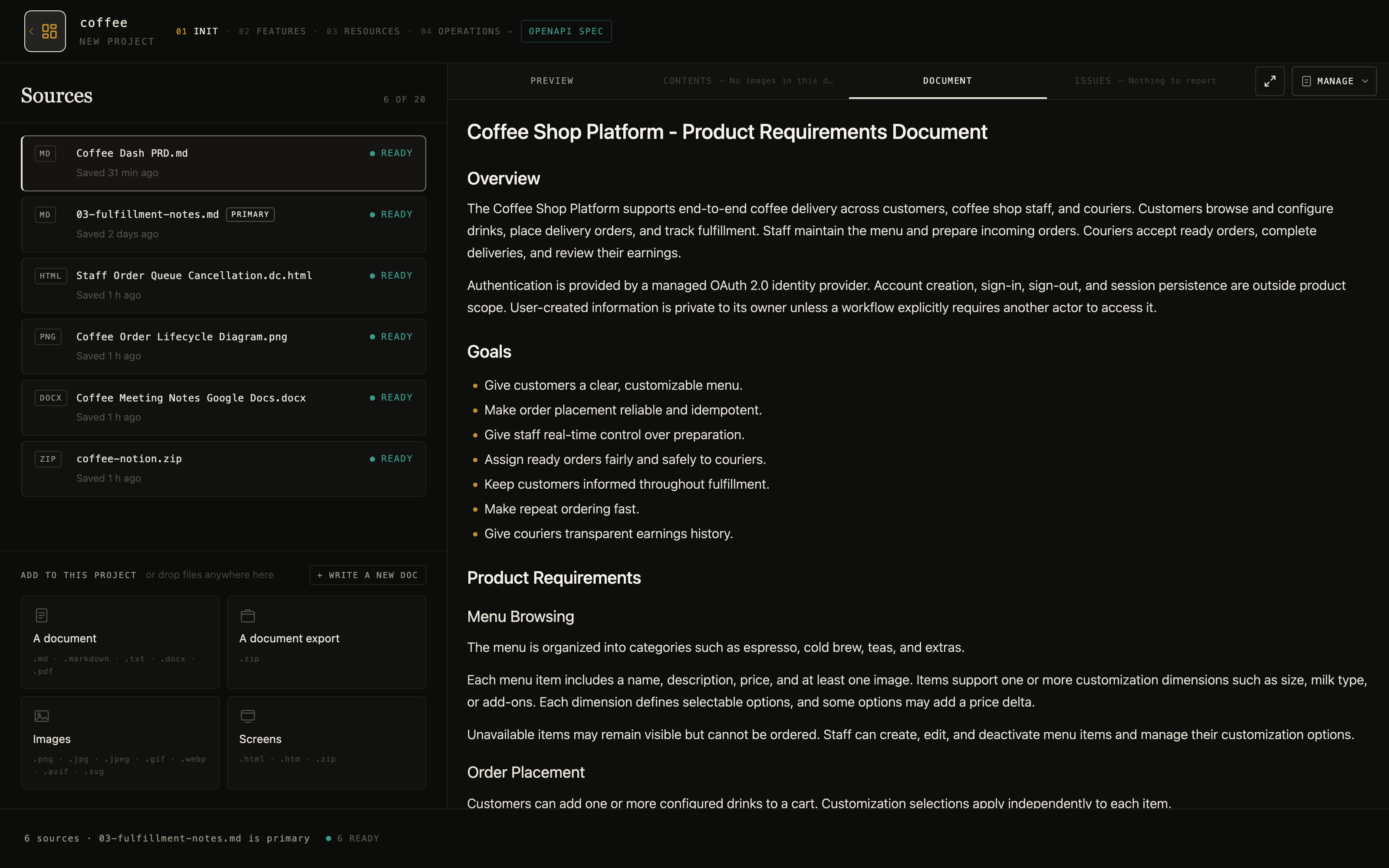
PRDs, Notion and Google Docs exports, images, diagrams, HTML, and Claude Design screens. Even an existing prototype can become part of the process. You shouldn’t have to rewrite your project into a special format to get started.
- 02
Conflicts
Find and resolve conflicts
ARCitect identifies contradictions, ambiguities, and gaps between sources, bringing the underlying information to your attention so you can make deliberate decisions before they become implementation problems.
- 03
Synthesis
Synthesize a complete Functional Spec
ARCitect connects the information across your sources, organizes features and requirements, and helps turn existing context into a coherent definition of your product. You and ARCitect work together to refine and improve that definition, rather than simply accepting whatever the documents happen to say.
Your team brings the knowledge, ideas, and intent. ARCitect helps you connect them, challenge them, and build on them. Together, you create a stronger definition of the product you’re setting out to build.
Your product defined
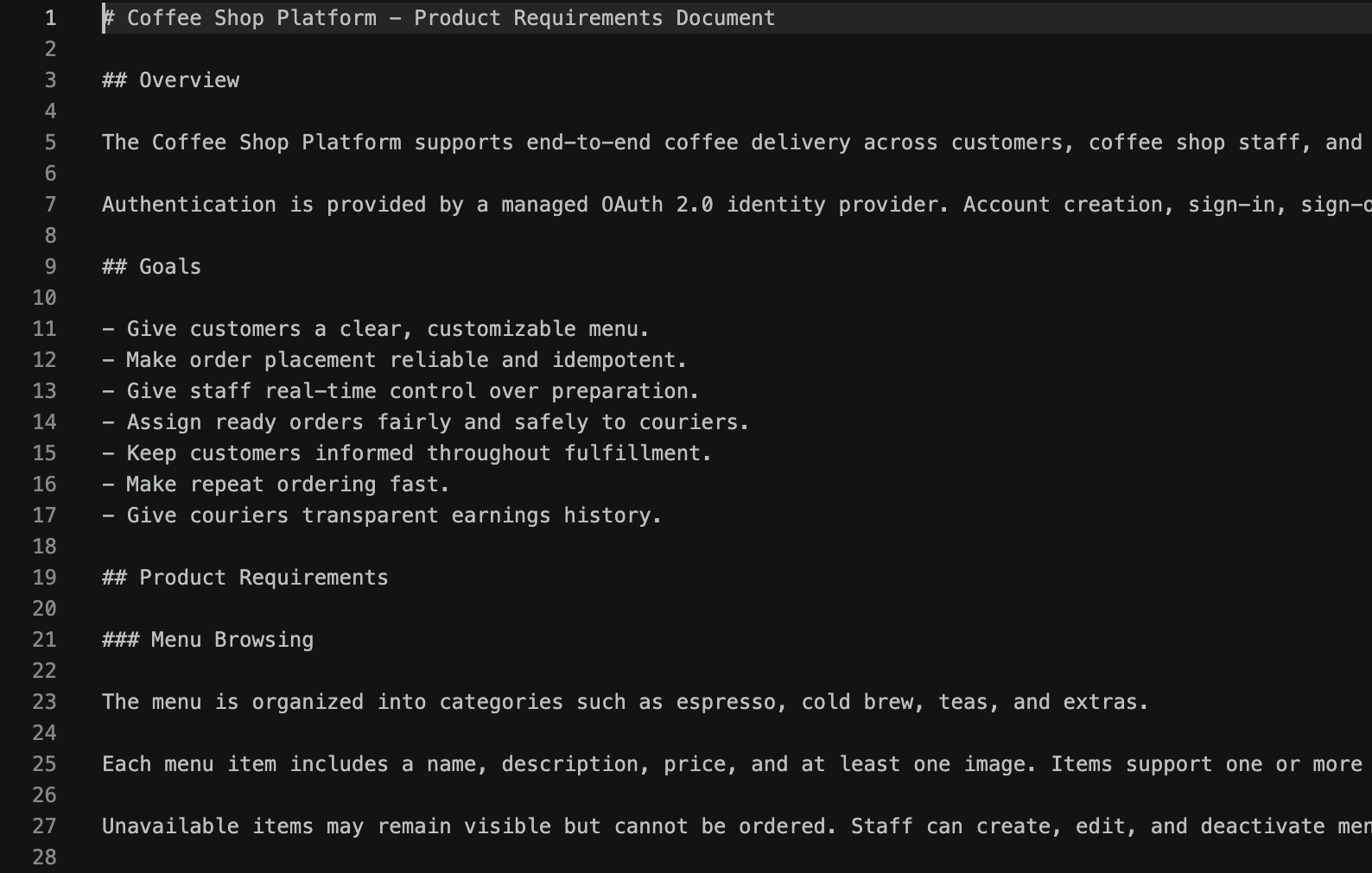
Your product is more than just some requirements in a Markdown file. Your product lives in the PRD, in the screens your designer built, in the architecture diagram, in the prototype you already click through.
ARCitect works with each source in its own form, reading documents, analyzing images, and rendering HTML or Claude Design screens. This ensures that you and ARCitect are looking at the same thing your users will.
Conflicts don’t stay in documents
Even when everyone’s doing great work, keeping every product decision aligned is hard.
A design might promise behavior the PRD never defines. Two documents might describe different rules for the same feature. A prototype might introduce an interaction that doesn’t fit the intended workflow.
These aren’t just documentation problems. They’re unanswered product decisions.
Left unresolved, those decisions get made during implementation, often independently by different engineers or coding agents. The frontend, backend, and data model can each end up with a perfectly reasonable interpretation that doesn’t agree with the others.
And by the time anyone notices, those assumptions have become code.
ARCitect catches conflicting requirements before they become conflicting code.
Coffee without conflicts
Let’s say we’re building that coffee delivery app. We’re developers, after all.
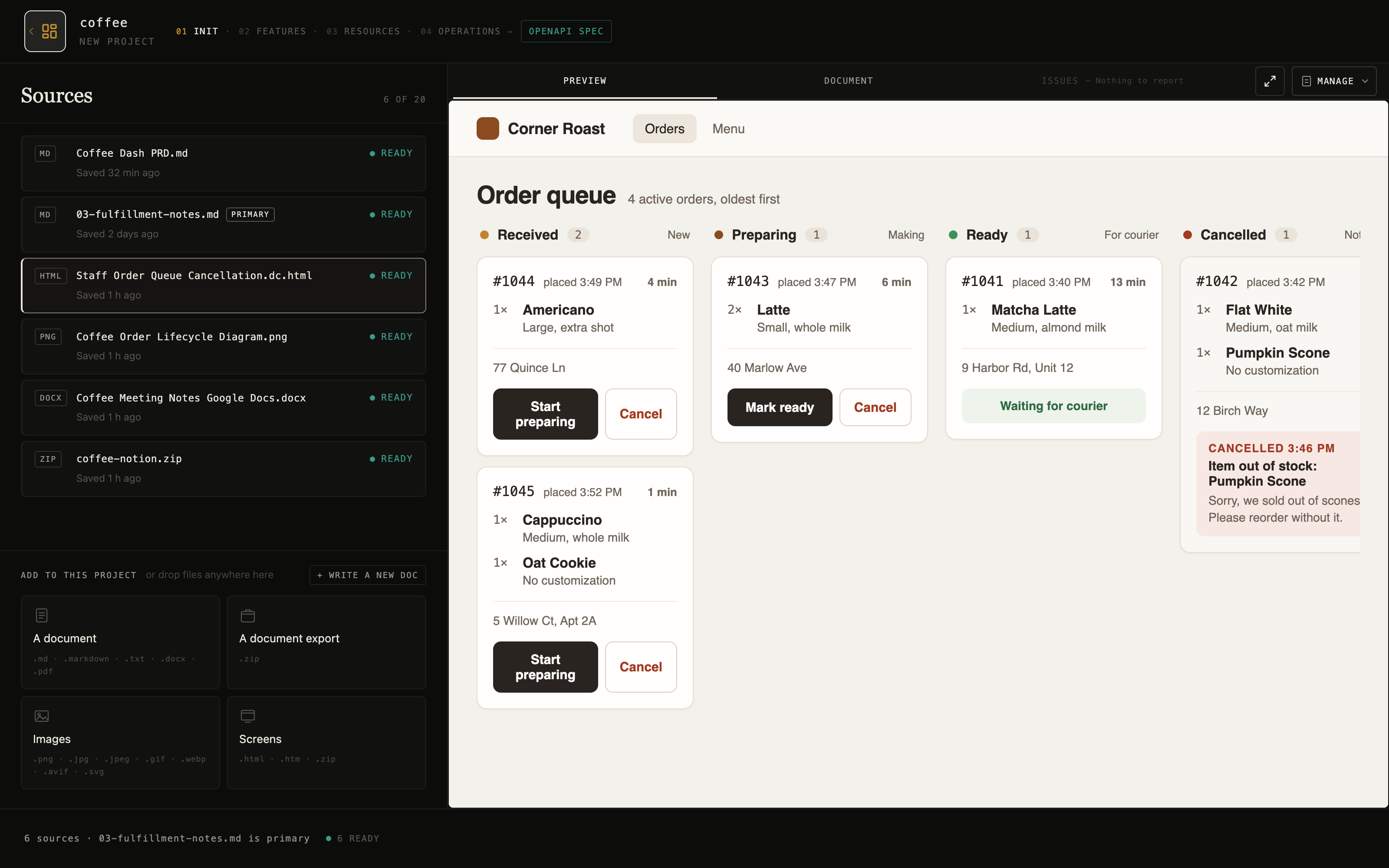
Our fulfillment notes define five order states, but the staff order screen has a Cancel button. The requirements never mention cancellation.
Is “Cancelled” another order state? Can staff cancel an order after preparation starts? What happens to the customer?
Order states
- 01Received
- 02Preparing
- 03Ready
- 04Picked up
- 05Delivered
- ??Cancelled
Order queue
1× Cappuccino, 1× Oat Cookie
ARCitect · Conflict
Is Cancelled an order state?
The PRD defines five order states. The staff screen lets a barista cancel an order. Left alone, the data model, the API, and the screen will each answer differently.
Without an answer, the frontend might offer cancellation the API doesn’t support, while the data model has no way to represent a cancelled order. What seemed like a finished feature can suddenly become a release-blocking problem.
ARCitect catches the inconsistency and presents the relevant sources together, making the unanswered questions explicit. We can decide how cancellation should work and carry that decision into the Functional Spec.
What would have been three competing assumptions becomes one deliberate product decision.
A Functional Spec is built, not found
Resolving conflicts is important, but it’s only part of the opportunity.
Bring your sources together and you start seeing things that weren’t obvious in any one of them. A design reveals a missing requirement. A workflow suggests a better feature. Looking at the whole product exposes opportunities to improve it that no individual document could have captured.
The specification your team needs isn’t hiding somewhere inside its existing documents.
Turning documents into more documents is easy. More Markdown isn’t more definition.
To deliver on the promise of spec-as-source, we needed more than a way to extract requirements or generate documentation. We needed a way to create a definition of the product that was complete, consistent, and good enough to drive what gets built.
That means combining your team’s knowledge and intent with ARCitect’s analysis, findings, and suggestions. Not just reconciling what’s already there, but adding what’s missing, exploring better approaches, and making decisions together.
That’s what we’ve built with ARCitect 2.0.
The Functional Spec isn’t simply a record of what your team already knew. It’s the product of everything you’ve learned and decided together.
It’s the best definition yet of what you’re building, because you and ARCitect built it together.
Better specs. Better software. Faster delivery.
The quality of your specification directly affects the quality of the software you build.
A requirement clarified before development is a conversation. The same requirement discovered halfway through implementation can mean reworking an API, changing the data model, and rebuilding a feature that was already considered finished.
Better definition means fewer surprises, fewer contradictory assumptions, and less time spent reconstructing decisions that should have been made earlier.
Coding agents have made implementation dramatically faster. That speed makes unresolved requirements matter sooner. Human teams face the same challenge: a developer who stops to clarify a requirement loses time, while one who guesses risks building the wrong behavior.
Give engineers and coding agents answers before they start building, and they can spend more time building the right product instead of correcting the wrong one.
For software companies, product quality and speed to market aren’t secondary benefits. They’re the point.
Improve the spec, improve the product, and shorten the path from an idea to working software.
Spec-as-source starts with a better spec
We’ve written before about spec-as-source: define the application once, then build the system from that definition.
ARCitect 2.0 brings us closer to that vision by making the Functional Spec something your team can build collaboratively from the work it already has.
And with Code Reactor, we’re carrying that definition all the way to production.
The spec becomes the system.
If you want to learn how ARC is enabling teams to ship production systems in zero days, with zero token cost, reach out at contact@buildwitharc.io.
Build your Functional Spec
Bring the sources your team already has and start with ARCitect 2.0 today.